|
|
A
Letter to
The Friends
Of the Cross
Saint
Louis de Montfort
1950 by Montfort Publications, Bay Shore, L.I., N.Y. US.
Imprimi
Potest:
S. Laurentii ad Separim die 3a
Maii , 1950.
A. JOSSELIN, S.M.M.,
Superior
General.
Nihil
Obstat:
MARTINUSJ. HEALY, S.T.D.,
Censor
Librorum.
Imprimatur:
±
THOMAS EDMUNDUS MOLLOY, S.T.D.,
Episcopus
Brooklyniensis.
Brooklynii, XX mensis
Octobri s 1950.
Originally
published in French by Saint Louis de Montfort as “Lettre aux
Amis de la Croix.”
This
work is published for the greater Glory of Jesus Christ through His
most
Holy Mother Mary and for the sanctification of the militant
Church and her members.
Publisher
www.eCatholic2000.com
Index
Table
of Contents
A
Letter to the Friends of the Cross
Illustrations
Publisher
II
A Letter to the Friends of the Cross
Preface
St. Louis Mary De Montfort
(1673–1716), author of this “Letter,” is widely
known through his treatise on “The True Devotion to the Blessed
Virgin Mary” and its abridgment “The Secret of Mary.”
Well has he merited the title of “Apostle of Mary” and
deservedly he is called “Tutor of the Legion of Mary.”
Addressing the many pilgrims at the canonization of St. De Montfort,
July 1947, the Holy Father calls him “the guide who leads you
to Mary and from Mary to Jesus.” Speaking of St. Louis’
“Prayer for Missionaries,” Father Faber says:
“Since the
Apostolical Epistles, it would be hard to find words that burn so
marvelously.” He has founded two religious congregations: the
priests and the brothers of the Company of Mary (Montfort Fathers)
and the Daughters of Wisdom. To his sons and daughters he has left a
rich heritage of doctrinal writings.
In this “Letter” St.
Louis manifests his passionate love for the Cross and pours forth the
noble sentiments of his ardent soul. Like St. Paul, he is “determined
to know nothing. . . . except Jesus Christ, and Him crucified”
(1 Cor. 2–2); “indeed a stumbling block to the Jews and
foolishness to the Gentiles, but to those who are called. . the
Wisdom of God” (1 Cor 1–23, 24).
While giving missions in the city of
Nantes in 1708, this eloquent preacher of the Cross and devout slave
of Jesus in Mary formed, from the most fervent souls among his
audiences, an association of “The Friends of the Cross.”
This fraternity or association was established .in the localities
evangelized by the holy Missionary to fight against the many
disorders and vices of the times and to make reparation for the
outrages perpetrated against the Sacred Heart of Jesus. Each time he
visited these places he exhorted the members to persevere in their
first fervor. Alas! Suddenly he was forbidden to preach to them.
Through intrigues, machinations and calumny his arch enemies, the
Janseni sts, prevailed to have their redoubtable adversary si I
enced.
During the summer of 1714 Father De
Montfort stopped at Rennes. Here, too, with diabolical hate and fury,
the Jansenists succeeded in having the saintly Missionary silenced.
Welcoming this added humiliation—for his heaviest cross was to
be without a cross—he took refuge at his al ma mater, the JEsui
t College at Rennes, where he was warmly received. Here he buried
himself in an eight day retreat meditating on the mystery of Calvary.
From an incessant heart-to-heart talk with the Man of Sorrows and His
Blessed Mother he received a new light and a more ardent love for the
Crucified Savior.
On the last day of the retreat St.
Louis, always eager to lead the faithful souls on the Royal Road of
the Cross, desired to communicate to his fervent followers the fruits
of his sublime meditation and poured forth the burning sentiments of
his apostolic soul in the following “Letter.”
In this epistle he gives us a holy
doctrine which he preached and lived all his I if e thus imitating
his Divine Master, Jesus Christ. It is believed that as a seminarian
he wrote those two wonderful poems: “The Strength of Patience”
(39 stanzas) and the “Triumph of the Cross” (31 stanzas)
in which we find the elements contained in this “Letter.”
As a young priest he wrote his first book, “Love of Eternal
Wisdom,” and in its beautiful fourteenth chapter, “The
Triumph of Eternal Wisdom in the Cross and by the Cross,” is
demonstrated the author’s great love for the Folly of the
Cross. In his allocution on St. De Montfort, quoted above, the Holy
Father said: “Being crucified himself he has a perfect right to
speak with authority on Christ Crucified. . . . He gives a sketch of
his own life when drawing up a plan of life in his ‘Letter to
the Friends of the Cross’ (Cf. “Letter,” No. 4, 2).
When this “Letter”
appeared St. Louis had already written the “Secret of Mary”
and most probably had finished its lucid development “True
Devotion to the Blessed Virgin Mary” to which this “Letter”
is very closely related and is, as it were, the development and
completion of the saintly author’s “plan of forming a
true client of Mary and a true disciple of Jesus Christ” (True
Devotion No. 111).
Although written more than two
centuries ago to fight against the evils and vices of those days this
“Letter” retains all its usefulness and freshness. It
wages a holy war on the evils, vices, pagan materialism and
secularism of the present day. St. Louis gives us a panacea for all
these ills: Christian mortification, prayer and a total consecration
of ourselves to the Immaculate Heart of Mary. In a strong staccato
tone he tells us “to suffer, to weep, to fast, to pray, to hide
ourselves, to humiliate ourselves, to impoverish ourselves, to
mortify ourselves. He who has not the spirit of Christ, which is the
spirit of the Cross, does not belong to Him, but they who belong to
Him have crucified their flesh and their concupiscence.”
Is this not the message Our Lady of
Fatima gave to the world—penance, mortification, sacrifice,
prayer and consecration to her Immaculate Heart—in 1917. Is it
not Our Blessed Mother who guided and inspired her faithful Apostle
to write it!
Thus imbued with a burning love for
Christ Crucified, a love born of humiliation, suffering, persecution
and contempt, like his Divine Master, St. Louis gives us, at the
close of his “Letter,” some wise, prudent rules that
teach us how to suffer and bear our crosses patiently, willingly and
joyfully in the footsteps of Our Lord and Crucified Savior. Thus
convinced of the necessity of the Cross, stimulated by the happy
effects it produces in our souls, and guided by the same rules laid
down by St. Louis De Montfort we will more readily renounce Satan,
the world and the filth; we will more patiently bear our trials,
crosses and tribulations and we will more carefully heed Christ’s
admonition: “If any one wishes to come after Me let him deny
himself, and take up his cross daily and follow Me” (Luke:
8–23).
The
Editor
Introduction
Dear Friends of the Cross:
1. Since the divine Cross keeps me
hidden and prevents me from speaking, I cannot, and do not even wish
to express to you by word of mouth the feelings of my heart on the
divine excellence and practices of your Association in
the adorable Cross of Jesus Christ.
However, on this last day of my
retreat, I come out, as it were, from the sweet retirement of my
interior, to trace upon paper a few little arrows from the Cross with
which to pierce your noble hearts. God grant that I could point them
with the blood of my veins and not with the ink of my pen. Even if
blood were required, mine, alas!, would be unworthy. May the spirit
of the living God, then, be the life, vigor and tenor of this letter.
May His unction be my ink, His divine Cross my pen and your hearts my
paper.
Part I
Excellence of the Association of the Friends of the
Cross
I—GRANDEUR
OF THE NAME, FRIENDS OF THE CROSS
2. Friends of the Cross, you are a
group of crusaders united to fight against the world, not like those
religious, men and women, who leave the world for fear of being
overcome, but like brave, intrepid warriors on the battlefront,
refusing to retreat or even to yield an inch. Be brave. Fight with
all your might.
Bind yourselves together in that
strong union of heart and mind which is far superior, far more
terrifying to the world and hell! than the armed forces of a
well-organized kingdom are to its enemies. Demons are united for your
destruction, but you, be united for their overthrow; the avaricious
are united to barter and hoard up gold and silver, combine your
efforts in the pursuit of the eternal treasures hidden in the Cross;
reprobates unite to make merry, but you, be united to suffer.

3. You call yourselves “Friends
of the Cross.” What a wonderful name! I must admit that it
charms and fascinates me. It is brighter than the sun, higher than
the heavens, more imposing and resplendent than any title given to
king or emperor. It is the great name of Christ Himself, true God and
true Man at one and the same time. It is the unmistakable title of a
Christian.
4. Its splendor dazzles me but the
weight of it frightens me. For this title implies that you have taken
upon yourselves difficult and inescapable obligations, which are
summed up in the words of the Holy Ghost: “A chosen generation,
a kingly priesthood, a holy nation, a purchased people” (1
Peter 2, 9).
A Friend of the Cross is one chosen
by God from among ten thousand who have reason and sense for their
only guide. He is truly divine, raised above reason and thoroughly
opposed to the things of sense, for he lives in the light of true
faith and burns with love for the Cross.
A Friend of the Cross is a mighty
king, a hero who triumphs over the devil, the world and the flesh and
their threefold concupiscence. He overthrows the pride of Satan
by his love for humiliation, he triumphs over the world’s geed
by his love for poverty and he restrains the sensuality of the flesh
by his love for suffering.
A Friend of the Cross is a holy man,
separated from visible things. His heart is lifted high above al I
that is frail and perishable; “his conversation is in heaven”
(Phil. 3, 20); he journeys here below like a stranger and pilgrim. He
keeps his heart free from the world, looks upon it with an
unconcerned glance of his left eye and disdainfully tramples it under
foot.
A Friend of the Cross is atrophy
which the crucified Christ won on Calvary, in union with His Blessed
Mother. He is another Benoni (Gen. 35, 18) or Benjamin, a son of
sorrow, a son of the right hand. Conceived in the sorrowful heart of
Christ, he comes into this world through the gash in the Savior’s
right side and is all empurpled in His blood. True to this heritage,
he breathes forth only crosses and blood, death to the world, the
flesh and sin and hides himself here below with Jesus Christ in God
(Col. 3, 3).
Thus, a perfect Friend of the Cross
is a true Christ-bearer, or rather another Christ, so much so that he
can say with truth: “I live, now not I, but Christ liveth in
me” (Gal. 2, 20).
5. My dear Friends of the Cross, does
every act of yours justify what the eminent name you bear implies? Or
at least are you, with the grace of God, in the shadow of Calvary’s
Cross and of Our Lady of Pity, really eager and truly striving to
attain this goal? Is the way you follow the one that leads to this
goal? Is it the true way of life, the narrow way, the thorn-strewn
way to Calvary? Or are you unconsciously traveling the world’s
broad road, the road to perdition? Do you realize that there is a
highroad which to all appearances is straight and safe for man to
travel, but which in reality leads to death?
6. Do you really know the voice of
God and grace from the voice of the world and human nature? Do you
distinctly hear the voice of God, our kind Father, pronouncing His
three-fold curse upon everyone who follows the world in its
concupiscence: “Woe, woe, woe to the inhabitants of the earth”
(Apoc. 8, 13) and then appealing to you with outstretched arms: “Be
separated, My chosen people (Is. 48,20; 52,11; Jer. 50,8; 51,6),
beloved Friends of the Cross of My Son, be separated from those
worldlings, for they are accursed by My Majesty, repudiated by My Son
(John 17,9) and condemned by My Holy Spirit (John 16,8–12). Do
not sit in their chair of pestilence; take no part in their
gatherings; do not even step along their highways (Ps. 1,1). Hurry
away from this great and infamous Babylon (Is. 48,20; Jer. 51,6);
hearken only to the voice of My Beloved Son; follow only in His
footprints; for He is the One I have given to be your Way, Truth,
Life (John 14,6) and Model: hear ye Him” (Matt. 17,5; Luke
9,35; Mark 9,6; 2 Pet. 1,17).
Is your ear attentive to the
pleadings of the lovable and cross-burdened Jesus, “Come,
follow Me; he that followeth Me walketh not in darkness (John 8,12);
have confidence, I have conquered the world” (John 16, 33)?
Part II
The Two Groups
I—THE
FOLLOWERS OF CHRIST AND THE FOLLOWERS OF THE WORLD
7. Dear Brethren, these are the two
groups that appear before you each day, the followers of Christ and
the followers of the world.
Our loving Savior’s group is to
the right, scaling a narrow path made all the narrower by the world’s
corruption. Our kind Master is in the lead, barefooted,
thorn-crowned, robed in His blood and weighted with a heavy cross.
There is only a handful of people who follow Him, but they are the
bravest of the brave. His gentle voice is not heard above the tumult
of the world, or men do not have the courage to follow Him in
poverty, suffering, humiliation and in the other crosses His servants
must bear all the days of their life.
II—THE
OPPOSING SPIRIT OF THE GROUPS
8. To the left is the world’s
group, the devil’s in fact, which is far superior in number,
and seemingly far more colorful and splendid in array. Fashionable
folk are all in a hurry to enlist, the highways are overcrowded,
although they are broad and ever broadening with the crowds that flow
through in a torrent. These roads are strewn with flowers, bordered
with all kinds of amusements and attractions, and paved with gold and
silver (Matt. 7,13–14).
9. To the right, the little flock
that follows Jesus can speak only of tears, penance, prayer and
contempt for worldly things Sobbing in their grief, they can be heard
repeating: “Let suffer, let us weep, let us fast, let us pray,
let us hide, let us humble ourselves, let us be poor, let us mortify
ourselves, for he who has not the spirit of Christ, the spirit of the
Cross, is none of Christ’s. Those who are Christ’s have
crucified their flesh with its concupiscence. We must be conformed to
the image of Jesus Christ or else be damned!” “Be brave,”
they keep saying to each other, “be brave, for if God is for
us, in us and leading us, who dare be against us? The One Who is
dwelling within us is stronger than the one who is in the world; no
servant is above his master; one moment of light tribulation worketh
an eternal weight of glory; there are fewer elect than man may think;
only the brave and daring take heaven by storm; the crown is given
only to those who strive lawfully according to the Gospel, not
according to the fashion of the world. Let us put all our strength
into the fight, and run very fast to reach the goal and win the
crown.” Friends of the Cross spur each other on with such
divine words.
10. Worldlings, on the contrary,
rouse one another to persist in their unscrupulous depravity. “Enjoy
life, peace and pleasure,” they shout, “Enjoy life, peace
and pleasure. Let us eat, let us drink, let us sing, let us dance,
let us play. God is good, He did not make us to damn us; God does not
forbid us to enjoy ourselves; we shall not be damned for that; away
with scruples; we shall not die.” And so they continue.
III—LOVING
APPEAL OF JESUS
11. Dear Brethren, remember that our
beloved Jesus has His eyes upon you at this moment, addressing you
individually: “See how almost everybody leaves Me practically
alone on the royal road of the Cross. Blind idol- worshipers sneer at
My Cross and brand it folly. Obstinate Jews are scandalized at the
sight of it as at some monstrosity (1 Cor. 1,23). Heretics tear it
down and break it to pieces out of sheer contempt. But one thing I
cannot say without My eyes filling with tears and My heart being
pierced with grief is that the very children I nourished in My bosom
and trained in My school, the very members I quickened with My spirit
have turned against Me, forsaken Me and joined the ranks of the
enemies of My Cross (Is. 1,2; Phil. 3,18). Would you also leave Me?
(John 6,68). Would you also forsake me and flee from My Cross, like
the worldlings, who are acting as so many Anti -Christs? (1 John
2,12). Would you subscribe to the standards of the day (Rom. 12,2),
despise the poverty of My Cross and go in quest of riches; shun the
sufferings connected with My Cross, to run after pleasure; spurn the
humiliations that must be borne with My Cross, and pursue worldly
honors? There are many who pretend that they are friends of Mine and
love Me but in reality they hate Me because they have no love for My
Cross. I have many friends of My table, but few indeed of My Cross.”
(Imitation of Jesus Christ, Book 2, Chap. 11.)
12. In answer to the gracious
invitation which Jesus extends, let us rise above ourselves. Let us
not, like Eve, listen to the insidious suggestion of sense. Let us
look up to the unique Author and Finisher of our faith, Jesus
crucified (Heb. 12,2). Let us fly from the corrupting concupiscence
and enticements of a corrupt world (2 Pet. 1,4). Let us love Jesus in
the right way, standing by Him through the heaviest of crosses. Let
us meditate seriously on these remarkable words of our beloved Master
which sum up the Christian life in its perfection: “If any man
will come after Ma let him deny hi mself, and take up his cross, and
follow Me” (Matt. 16,24).
Part III
Practices of Christian Perfection, the Divine
Master’s Program
13. Christian perfection consists:
1. in willing to become a saint: “If
any man will come after Me”;
2. in self-denial . “Let him
deny himself’;
3. in suffering: “Let him take
up his cross”;
4. in doing: “Let him follow
Me.”
14. If anyone,
not many a
one, shows that the elect who are
willing to be made conformable to the crucified Christ by
carrying their cross are few in number. It would cause us to faint
away from grief to learn how surprisingly small is their number.
It is so small that among ten
thousand people there is scarcely one to be found, as was revealed to
several Saints, among whom St. Simon Stylita, referred to by the holy
Abbot Ni I us, followed by St. Basil, St. Ephrem and others. So
small, indeed, that if God willed to gather them together, He would
have to cry out as he did of yore through the voice of a prophet:
“Come ye together one by one” (Is. 27,12), one from this
province and one from that kingdom.
[St. De Montfort here speaks of
that small group of saintly souls who carry their cross more
perfectly. He does not, however, exclude from salvation that vast
multitude of less perfect Christians which the mercy of God wills to
save.]
I—THE
DESIRE TO BECOME A SAINT?
15. If anyone wills: if a
person has a real and definite determination and is prompted not by
natural feelings, habit, self-love, personal interest or human
respect but by an all-masterful grace of the Holy Ghost which is not
communicated indiscriminately: “it is not given to all men to
understand this mystery” (Matt. 13,11). In fact, only a
privileged number of men receive this practical knowledge of the
mystery of the Cross. For that man who climbs up to Calvary and lets
himself be nailed on the Cross with Jesus in the heart of his own
country must be a brave man, a hero, a resolute man, one who is
lifted up in God, who treats as muck both the world and hell, as well
as his very body and his own will. He must be resolved to relinquish
all things, to undertake anything and to suffer everything for Jesus.
Understand this, dear Friends of the
Cross, should there be anyone among you who has not this firm
resolve, he is just limping along on one foot, flying with one wing,
and undeserving of your company, since he is not worthy to be called
a Friend of the Cross, for we must love the Cross as Jesus Christ
loved it “with a great heart and a willing mind” (2 Mach.
1,3). That kind of half-hearted will is enough to spoil the whole
flock, like a sheep with the scurvy. If any such one has slipped into
your fold through the contaminated door of the world, then in the
name of the crucified Christ, drive him out as you would a wolf from
your sheepfold.
16. “If anyone will come after
Me”: for I have humbled Myself and reduced Myself to mere
nothingness in such a way that I made Myself a worm rather than a
man: “I am a worm and no man” (Ps. 21,7). After Me:
for if I came into the world, it was only to espouse the Cross:
“Behold I am come” (Ps. 39,8; Heb. 10,7–9); to set
the cross in My heart of hearts: “In the midst of my heart”
(Ps. 39,9); to love it from the days of my youth: “I have loved
it from my youth” (Wisdom 8,2); only to long for it all the
days of my life: “how straitened I am” (Luke 12,50); only
to bear it with a joy I preferred even to the joys and delights that
heaven and earth could offer: “Who, having joy set before him,
endured the cross” (Heb. 12,2); and, finally, not to be
satisfied until I had expired in its divine embrace.
II—SELF-DENIAL
17. Therefore, if anyone wants to
come after Me, annihilated and crucified, he must glory as I did only
in the poverty, humiliation and suffering of My Cross: “let him
deny himself’ (Matt. 16,24).
Far be from the Company of the
Friends of the Cross those who pride themselves in suffering, the
worldly-wise, elated geniuses and self-conceited individuals who are
stubborn and puffed-up with their lights and talents Far be they from
us, those endless talkers who make plenty of noise but bring forth no
other fruit than vainglory.
Far from us those high-browed
devotees everywhere displaying the self-sufficient pride of Lucifer:
“I am not like the rest!” (Luke 18,11). Far be from us
those who must always justify themselves when blamed, resist when
attacked and exalt themselves when humbled.
Be careful not to admit into your
fellowship those frail, sensitive persons who are afraid of the
slightest pin-prick, who sob and sigh when faced with the lightest
suffering, who have never experienced a hair-shirt, a discipline or
any other penitential instrument, and who, with their fashionable
devotions, mingle the most artful delicacy and the most refined lack
of mortification.
III—SUFFERING
18. Let him take up his cross, the
one that is his. Let this man or this woman, rarely to be
found and worth more than the entire world (Prov. 31,10–31),
take up with joy, fervently clasp in his arms and bravely set upon
his shoulders this cross that is his own and not that of another; his
own cross, the one that My Wisdom designed for him in every detail of
number, weight and measurement; his own cross whose four dimensions,
its length, breadth, thickness and height (Eph. 3,18), I very
accurately gauged with My own hands; his own cross which all out of
love for him I carved from a section of the very Cross I bore on
Calvary; his cross, the grandest of all the gifts I have for My
chosen ones on earth; his cross, made up in its thickness of temporal
loss, humiliation, disdain, sorrow, illness and spiritual trial which
My Providence will not fail to supply him with every day of his life;
his cross, made up in its length of a definite period of days or
months when he will have to bear with slander or be helplessly
stretched out on a bed of pain, or forced to beg, or else a prey to
temptation, dryness, desolation and many another mental anguish; his
cross, made up in its breadth of hard and bitter situations stirred
up for him by his relatives, friends or servants; his cross, finally,
made up in its depth of secret sufferings which I will have him
endure nor will I allow him any comfort from created beings, for by
My order they will turn from him too and even join Mein making him
suffer.
19. Let him carry it, and not
drag it, not shoulder it off, not lighten it, nor hide it. Let him
hold it high in hand, without impatience or peevishness, without
voluntary complaint or grumbling, without dividing or softening,
without shame or human respect.
Let him place it on his forehead and
say with St. Paul: “God forbid that I should glory save in the
Cross of Our Lord Jesus Christ” (Gal. 6,14).
Let him carry it on his shoulders,
after the example of Jesus Christ, and make it his weapon to victory
and the scepter of his empire (Is 9,16).
Let him root it in his heart and
there change it into a fiery bush, burning day and night with the
pure love of God, without being consumed.
20. The cross: it is the cross
he must carry for there is nothing more necessary, more useful,
more agreeable and more glorious than suffering for Jesus Christ.
21. All of you are sinners and there
is not a single one who is not deserving of hell; I myself deserve it
the most. These sins of ours must be punished either here or
hereafter. If they are punished in this world, they will not be
punished in the world to come.
If we agree to God’s punishing
here below, this punishment will be dictated by love. For mercy,
which holds sway in this world, will mete out the punishment, and not
strict justice. This punishment will be light and momentary, blended
with merit and sweetness and followed up with reward both in time and
eternity.
22. But if the punishment due to our
sins is held over for the next world, then God’s avenging
justice, which means fire and blood, will see to the punishing. What
horrible punishment! How incomprehensible, how unspeakable! “Who
knoweth the power of thy anger?” (Ps. 89,11). Punishment devoid
of mercy (James 2,13), pity, mitigation or merit; without limit and
without end. Yes, without end! That mortal sin of a moment that you
committed, that deliberate evil thought which now escapes your
memory, the word that is gone with the wind, that act of such short
duration against God’s law—they shall all be punished for
an eternity, punished with the devils of hell, as long as God is God!
The God of vengeance will have no pity on your torments or your sobs
and tears, violent enough to cleave the rocks. Suffering and still
more suffering, without merit, without mercy and without end!
23. Do we think of this, my dear
Brothers and Sisters, when we have some trial to undergo here below?
Blessed indeed are we who have the privilege of exchanging an eternal
and fruitless penalty for a temporary and meritorious suffering, just
by patiently carrying our cross. What debts we still have to pay! How
many sins we have committed which, despite a sincere confession and
heartfelt contrition, will have to be atoned for in Purgatory for
many a century, simply because in this world we were satisfied with a
few insignificant penances! Let us settle our debts with good grace
here below in cheerfully bearing our crosses, for in the world to
come everything must be expiated, even the idle word (Matt. 12,36)
and even to the last farthing. If we could lay hands on the devil’s
death-register in which he has noted down all our sins and the
penalty to be paid, what a heavy debit we would find and how joyfully
we would suffer many years hereon earth rather than a single day in
the world to come.
-
Do you not flatter yourselves,
Friends of the Cross, that you are, or that you want to be, the
friends of God? Be firmly resolved then to drink of the chalice
which you must necessarily drink if you wish to enjoy the friendship
of God. “They drank the chalice of the Lord and became the
friends of God” (Common of Apostles, Lesson 7). The beloved
Benjamin had the chalice while his brothers had only the wheat (Gen.
44,1–4). The disciple whom Jesus preferred had his Master’s
heart, went up with Him to Calvary and drank of the chalice. “Can
you drink my chalice?” (Matt 20,22). To desire God’s
glory is good, indeed, but to desire it and pray for it without
being resolved to suffer all things is mere folly and senseless
asking. “You know not what you ask (Matt. 20,2 2) . . . you
must undergo much suffering” (Acts 14,21): you must, it is
necessary, it is indispensable!

We can enter the kingdom of heaven
only at the price of many crosses and tribulations.
25. You take pride in being God’s
children and you do well; but you should also rejoice in the lashes
your good Father has given you and in those He still means to give
you; for He scourges every one of His children (Prov. 3,11; Heb.
13,5–6; Apoc. 3,19). If you are not of the household of His
beloved sons, then—how unfortunate! what a calamity!—you
are, as St. Augustine says, listed with the reprobate. Augustine also
says: “The one that does not mourn like a stranger and wayfarer
in this world cannot rejoice in the world to come as a citizen of
heaven” (Sermon 31, 5 and 6). If God the Father does not
send you worth-while crosses from time to time, that is because He no
longer cares for you and is angry at you. He considers you a
stranger, an outsider undeserving of His hospitality, or an unlawful
child who has no right to share in his father’s estate and no
title to his father’s supervision and discipline.
26. Friends of the Cross, disciples
of a crucified God, the mystery of the Cross is a mystery unknown to
the Gentiles, repudiated by the Jews and spurned by both heretics and
bad Catholics, yet it is the great mystery which you must learn to
practice at the school of Jesus Christ and which you can learn only
at His School. You would look in vain for any philosopher who taught
it in the Academies of ancient times; you would ask in vain either
the senses or reason to throw any light on it, for Jesus alone,
through His triumphant grace, is able to teach you this mystery and
make you relish it.
Become proficient, therefore, in this
super-eminent branch of learning under such a skillful Master. Having
this knowledge, you will be possessed of all other branches of
learning, for it surpassingly comprises them all. The Cross is our
natural as well as our supernatural philosophy. It is our divine and
mysterious theology. It is our philosopher-stone which, by dint of
patience, is able to transmute the grossest of metals into precious
ones, the sharpest pain into delight, poverty into wealth and the
deepest humiliation into glory. He amongst you who knows how to carry
his cross, though he know not A from B, towers above all others in
learning.
Listen to the great St. Paul, after
his return from the third heaven, where he was initiated into
mysteries which even the Angels had not learned. He proclaims that he
knows nothing and wants to know nothing but Jesus Christ crucified (1
Cor. 2,2). You can rejoice, then, if you happen to be a poor man
without any schooling or a poor woman deprived of intellectual
attainments, for if you know how to suffer with joy you are far more
learned than a doctor of the Sorbonne who is unable to suffer as
you do.
27. You are members of Jesus Christ
(1 Cor. 6,15; 12,27; Eph. 5,30). What an honor! But, also, what need
for suffering this entails! When the Head is crowned with thorns
should the members be wearing a laurel of roses? When the Head is
jeered at and covered with mud from Calvary’s road should its
members be enthroned and sprayed with perfume? When the Head has no
pillow on which to rest, should its members be reclining on soft
feathers? What an unheard of monster such a one would be! No, no,
dear companions of the Cross, make no mistake. The Christians you see
around you, fashionably attired, super-sensitive, excessively haughty
and sedate, are neither true disciples nor true members of the
crucified Jesus. To think otherwise would be an insult to your
thorn-crowned Head and His Gospel truth.
My God! How many would-be Christians
there are who imagine they are members of the Savior when in reality
they are His most insidious persecutors, for while blessing
themselves with the sign of the Cross, they crucify Him in their
hearts
If you are led by the spirit of Jesus
and are living the same life with Him, your thorn-crowned Head, then
you must look forward to nothing but thorns, nails and lashes, in a
word, to nothing but across.
A real disciple needs to be treated
as his Master was, a member as its Head. And if the Head should offer
you, as He offered St. Catherine of Siena, the choice between a crown
of thorns and a crown of roses, do as she did and grasp the crown of
thorns, fastening it tightly to your brow in the likeness of Jesus.
28. You are aware of the fact that
you are living temples of the Holy Spirit (1 Cor. 6,19) and that,
like living stones (1 Pa 2,5), you are to be placed by the God of
love in the heavenly Jerusalem He is building. You must expect then
to be shaped, cut and chiseled under the hammer of the Cross,
otherwise you would remain unpolished stone, of no value at all, to
be disregarded and cast aside. Do not cause the hammer to recoil when
it strikes you. Yield to the chisel that is carving you and the hand
that is shaping you. It may be that this skillful and loving
Architect wants to make you a cornerstone in His eternal edifice, one
of His most faithful portraits in the heavenly kingdom. So let Him
see to it. He loves you, He really loves you; He knows what He is
doing, He has e experience. Love is behind every one of His telling
strokes; nor will a single stroke miscarry unless your impatience
deflects it.
29. At times the Holy Spirit compares
the cross to a winnowing that clears the good grain from the chaff
and dust (Matt. 3,13; Luke 3,17). Like grain in the winnowing, then,
let yourself be shaken up and tossed about without resistance, for
the Father of the household is winnowing you and will soon have you
in His harvest. He also likens the cross to afire whose intense heat
burns rust off iron. God is a devouring fire (Deut. 4,24; 9,3; Heb.
13,29) dwelling in our souls through His Cross, purifying them yet
not consuming them, exemplified in the past in a burning bush (Ex.
3,2–3). He likens it at times to the crucible of a forge where
gold is refined (Prov. 17,3; Eccli. 2,5) and dross vanishes in smoke,
but, in the processing, the precious metal must be tried by fire
while the baser constituents go up in smoke and flame. So, too, in
the crucible of tribulation and temptation, true Friends of the Cross
are purified by their constancy in suffering while the enemies of the
Cross vanish in smoke by their impatience and murmurings.
30. Behold, dear Friends of the
Cross, before you a great cloud of witnesses (Heb. 12,1–2) who
silently testify that what I assert is the truth. For instance,
consider Abel, a righteous man, who was slain by his own brother;
then Abraham, a righteous man, who journeyed on the earth like a
wanderer; Lot, a righteous man, who was driven from his own country;
Jacob, a righteous man, who was persecuted by his own brother;
Tobias, a righteous man, who was stricken with blindness; Job, a
righteous man, who was pauperized, humiliated and covered with sores
from the crown of his head to the sol cm of his feet.
31. Consider the countless Apostles
and Martyrs who were bathed in their own blood; the countless Virgins
and Confessors who were pauperized, humiliated, exiled and cast
aside. Like St. Paul they fervently proclaim: Behold our beloved
Jesus, “Author and Finisher of the faith” (Heb. 12,2) we
put in Him and in His Cross; it was necessary for Him to suffer and
so to enter through the Cross into His glory (Luke 24,26).
There at the side of Jesus consider
Mary, who had never known either original or actual sin, yet whose
tender, Immaculate Heart was pierced with a sharp sword even to its
very depths. If I had time to dwell on the Passion of Jesus and Mary,
I could prove that our sufferings are naught compared to theirs.
32. Who, then, would dare claim
exemption from the cross? Who would refuse to rush to the very place
where he knows he will find a cross awaiting him? Who would refuse to
borrow the words of the martyr, St. Ignatius: “Let fire and
gallows, wild beasts and all the torments of the devil assail me, so
that I may rejoice in the possession of Jesus Christ.”
-
If you have not the patience to
suffer and the generosity to bear your cross like the chosen ones of
God, then you will have to trudge under its weight, grumbling and
fretting like reprobates; like the two animals that dragged the Ark
of the Covenant, lowing as they went (1 Kings 6,12); like Simon the
Cyrenaean who unwillingly put his hand to the very Cross of Christ
(Matt. 27,32; Mark 15,21), complaining while he carried it. You will
be like the impenitent thief who from the summit of his cross
plunged headlong into the depths of the abyss.
No, the cursed earth on which we live
cannot give us happiness. We can see none too clearly in this
benighted land. We are never perfectly calm on this troubled sea. .
We are never without warfare in a world of temptation and
battlefields We cannot escape scratches on a thorn-covered earth.
Both elect and reprobate must bear their cross here, either willingly
or unwillingly. Remember these words:
“Three
crosses stand on Calvary’s height
One must be chosen, so choose
aright;
Like a saint you must suffer, or a
penitent thief,
Or like a reprobate, in endless
grief.”
This means that if you will not
suffer gladly as Jesus did, or patiently like the penitent thief,
then you must suffer despite yourself like the impenitent thief. You
will have to drain the bitterest chalice even to the dregs, and with
no hope of relief through grace.
You will have to bear the entire
weight of your cross, and without the powerful help of Jesus Christ.
Then, too, you will have that awful weight to bear which the devil
will add to your cross, by means of the impatience the cross will
cause you. After sharing the impenitent thief’s unhappiness
here on earth, you will meet him again in the fires of hell.
34. But if you suffer as you should,
your cross will be a sweet yoke (Matt. 11,30), for Christ will share
it with you. Your soul will be borne on it as on a pair of wings to
the portals of Heaven. It will be the mast on your ship guiding you
happily and easily to the harbor of salvation.
Carry your cross with patience:
across patiently borne wi II be your light in spiritual darkness, for
he knows naught who knows not how to suffer (Eccli. 34,9).
Carry your cross with joy and you
will be inflamed with divine love, for only in suffering can we dwell
in the pure love of Christ.
Roses are only gathered from among
thorns. As wood is fuel for the fire, so too is the Cross the only
fuel for God’s love. Remember that saying we read in the
“Following of Christ”: “Inasmuch as you do violence
to yourself,” suffering patiently, “insofar do you
advance” in divine love (Bk. 1, Chap. 15,11). Do not expect
anything great from those fastidious, slothful souls who refuse the
Cross when it approaches and who do not go in search of any, when
discretion allows. What are they but unti I led soil, which can
produce only thorns because it has not been turned up, harrowed and
furrowed by a judicious laborer. They are like stagnant water which
is unfit for ether washing or drinking.
Carry your cross joyfully and none of
your enemies will be able to resist its conquering strength (Luke
21,15), while you yourself will enjoy its relish beyond compare. Yes,
indeed, Brethren, remember that the real Paradise here on earth is to
be found in suffering for Jesus, Ask the saints. They will tell you
that they never tasted a banquet so delicious to the soul than when
undergoing the severest torments. St. Ignatius the Martyr said: “Let
all the torments of the devil come upon me!” “Either
suffering or death!,” said St. Theresa, and St. Magdalen de
Pazzi: “Not death but suffering!” “May I suffer and
be despised for Thy sake,” said Blessed John of the Cross. In
reading the lives of the saints we find many others speaking in the
self-same terms.
Dear Brethren, believe the Word of
God, for the Holy Spirit says: The Cross affords all kinds of joy to
anyone without exception who suffers cheerfully for God, (Jas. 1,2).
The joy that springs from the cross is keener than the joy which a
poor person would experience if over-laden with an abundance of
riches, than the joy of a peasant who is made ruler of his country,
than the joy of a commander-in-chief over the victories he has won,
than the joy of a prisoner released from his fetters. In conclusion,
let us picture the greatest joys to be found here below: the joy of a
crucified person who knows how to suffer not only equals them but
even surpasses them all.
35. Be glad, therefore, and rejoice
when God favors you with one of His choicest crosses, for without
realizing it you are being blessed with the greatest gift that Heaven
has, the greatest gift of God. Yes, the cross is God’s greatest
gift. If you could only understand this, you would have Masses said,
you would make novenas at the tombs of the saints; you would
undertake long pilgrimages, as did the saints, to obtain this divine
gift from Heaven.
36. The world claims it is madness on
your part, degrading and stupid, rash and reckless. Let the world, in
its blindness, say what it likes. This blindness which is responsible
for a merely human and distorted view of the cross is a source of
glory for us. For every ti me they provide us with crosses by mocking
and persecuting us, they are simply offering us jewels, setting us
upon a throne and crowning us with laurels
37. What I say is but little. Take
all the wealth and honors and scepters and brilliant diadems of
monarchs and princes, says St. John Chrysostom, they are all
insignificant compared with the glory of the Cross; it is greater
even than the glory of the Apostles and the Sacred Writers.
Enlightened by the Holy Spirit, this saintly man goes as far as to
say: “If I were given the preference, I would gladly leave
Heaven to suffer for the God of Heaven. I would prefer the darkness
of a dungeon to the thrones of the highest heaven and the heaviest of
crosses to the glory of the Seraphim.
Suffering for me is of greater value
than the gift of miracles, the power to command the infernal spirits,
to master the physical universe, to stop the sun in its course and to
raise the dead to life. Per and Paul are more glorious in the
shackles of a dungeon than in being lifted to the third heaven and
presented with the keys to Paradise.”
38. In fact, was it not the Cross
that gave Jesus Christ “a name which is above all names; that
in the name of Jesus every knee should bow of those that are in
heaven, on earth and under the earth” (Phil. 2,9–10). The
glory of the one who knows how to suffer is so great that the
radiance of his splendor rejoices heaven, angels and men and even the
God of Heaven. If the saints in Heaven could still wish for something
they would want to return to earth so as to have the privi le of
bearing a cross.
39. If the cross is covered with such
glory on earth, how magnificent it must be in Heaven. Who could ever
understand and tell the eternal weight of glory we are given when,
even for a single instant, we bear a cross as a cross should be borne
(2 Cor. 4,17). Who could ever collate the glory that will be given in
Heaven for the crosses and sufferings we carried for a year, perhaps
even for a lifetime.
40. Evidently, my dear Friends of the
Cross, heaven is preparing something grand for you, as you are told
by a great Saint, since the Holy Ghost has united you so intimately
to an object which the whole world so carefully avoids. Evidently,
God wishes to make of you as many saints as you are Friends of the
Cross, if you are faithful to your calling and dutifully carry your
cross as Jesus Christ has carried His.
IV—IN
CHRIST-LIKE FASHION
-
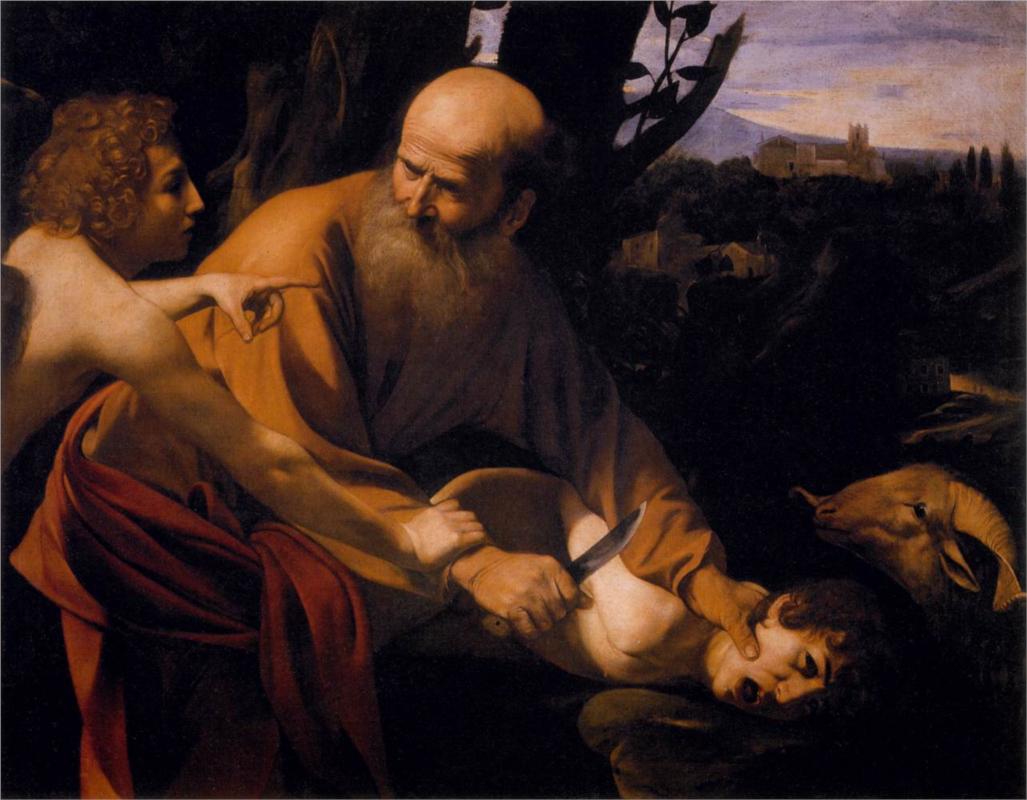
But mere suffering is not
enough. For even the devil and the world have their martyrs. We must
suffer and bear our crosses in the footsteps of Jesus. Let him
follow Me: this means that we must bear our crosses as Jesus
bore His. To help you do this, I suggest the following rules:
Part IV
Fourteen Rules to Follow in Carrying One’s Cross
42. First. Do not, deliberately and
through your own fault, procure crosses for yourself. You must not do
evil in order to bring about good. You should never try to bring
discredit upon yourself by doing things improperly, unless you have a
special inspiration from on high. Strive rather to imitate Jesus
Christ, who did all things well (Mark 7,37), not out of self-love or
vainglory, but to please God and to win over His fellow-men. Even
though you do the best you can in the performance of your duty, you
will still have to contend with contradiction, persecution and
contempt which Divine Providence will send you against your will and
without your choice.
43. Second. Should your neighbor be
scandalized, although without reason, at any action of yours which in
itself is neither good nor bad, then, for the sake of charity,
refrain from it, to avoid the scandal of the weak. This heroic act of
charity will be of much greater worth than the thing you were doing
or intended to do.
If, however, you are doing some
beneficial or necessary thing for others and were unreasonably
disapproved by a hypocrite or prejudiced person, then refer the
matter to a prudent adviser, letting him judge of its expedience and
necessity. Should his decision be favorable, you have only to
continue and let these others talk, provided they take no means to
prevent you. Under such circumstances, you have Our Lord’s
answer to His disciples when they informed Him that Scribes and
Pharisees were scandalized at His words and deeds: “Let them
alone; they are blind.” (Matt. 15,14).
44. Third. Certain holy and
distinguished persons have been asking for and seeking, or even, by
eccentricities, bringing upon themselves, crosses, disdain and
humiliation. Let us simply adore and admire the extraordinary
workings of the Holy Spirit in these souls. Let us humble ourselves
in the presence of this sublime virtue, without making any attempt to
reach such heights, for compared with these racing eagles and roaring
lions we are simply fledglings and cubs
45. Fourth. You can nevertheless and
even should ask for the wisdom of the Cross, that sapid, experimental
knowledge of the truth, which, in the light of faith, shows us the
deepest mysteries, among others the mystery of the Cross. But this
can be had only by dint of hard toil, profound humiliation and
fervent prayer. If you need that perfect spirit (Ps. 50,14) which
enables us to bear the heaviest crosses with courage—that
sweet, kindly spirit (Luke 11,13) which enables us to relish in the
higher part of the soul things that are bitter and repulsive—that
wholesome, upright spirit (Ps 50,12) which seeks God and God
alone—that all-embracing knowledge of the Cross—briefly
that infinite treasure which gives the soul that knows how to make
good use of it a share in the friendship of God (Wisdom 7,14), ask
for this wisdom, ask for it constantly, fervently, without hesitation
or fear of not obtaining it. You will certainly obtain it and then
see clearly, in the light of your own experience, how it is possible
to desire, seek and relish the Cross.
46. Fifth. If, inadvertently, you
blunder into a cross, or even if you do so through your own fault,
forthwith humble yourselves interiorly under the mighty hand of God
(1 P. 5,6), but do not worry over it. You might say to yourself:
“Lord, there is another trick of my trade.” If the
mistake you made was sinful, accept the humiliation you suffer as
punishment. But if it was not sinful, then humbly accept it in
expiation of your pride. Often, actually very often, God allows His
greatest servants, those who are far advanced in grace, to make the
most humiliating mistakes. This humbles them in their own eyes and in
the eyes of their fellow men. It prevents them from seeing and taking
pride in the graces God bestows on them or in the good deeds they do,
so that, as the Holy Ghost declares: “no flesh should glory in
the sight of God” (1 Cor. 1,29).
47. Sixth. Be fully persuaded that
through the sin of Adam and through our own actual sins everything
within ourselves is vitiated, not only the senses of the body but
even the powers of the soul. So much so that as soon as the mind,
thus vitiated, takes delight in poring over some gift received from
God, then the gift itself, or the act or the grace is tarnished and
vitiated and God no longer favors it with His divine regard. Since
looks and thoughts of the human mind can spoil man’s best
actions and God’s choicest gifts, what about the acts which
proceed from man’s own will and which are more corrupt than the
acts of the mind?
So we need not wonder, when God hides
His own within the shadow of His countenance (Ps. 30,21), that they
may not be defiled by the regards of their fellow men or by their own
self-consciousness. What does not this jealous God allow and do to
keep them hidden! How often He humiliates them! Into how many faults
He permits them to fall! How often He allows them to be tempted as
St. Paul was tempted (2 Cor. 12,7)! In what a state of uncertainty,
perplexity and darkness He leaves them! How wonderful God is in His
saints, and in the means He takes to lead them to humility and
holiness!
48. Seventh. Be careful not to
imitate proud self-centred zealots. Do not think that your crosses
are tremendous, that they are tests of your fidelity to God and
tokens of God’s extraordinary love for you. This gesture has
its source in spiritual pride. It is a snare quite subtle and
beguiling but full of venom. You ought to acknowledge, first, that
you are so proud and sensitive that you magnify straws into rafters,
scratches into deep wounds, rats into elephants, a meaningless word,
a mere nothing, in truth, into an outrageous, treasonable insult.
Second, you should acknowledge that the crosses God sends you are
really and truly loving punishments for your sins, and not special
marks of God’s benevolence. Third, you must admit that He is
infinitely lenient when He sends you some cross or humiliation, in
comparison with the number and atrocity of your sins. For these sins
should be considered in the light of the holiness of a God Whom you
have offended and Who can tolerate nothing that is defiled; in the
light of a God dying and weighted down with sorrow at the sight of
your sins; in the light of an everlasting hell which you have
deserved a thousand times, perhaps a hundred thousand times. Fourth,
you should admit that the patience you put into suffering is more
tinged than you think with natural human motives. You have
only to note your little self-indulgences, your skillful seeking for
sympathy, these confidences you so naturally make to friends or
perhaps to your spiritual director, your quick, clever excuses, the
murmurings or rather the detractions so neatly worded, so charitably
spoken against those who have injured you, the exquisite delight you
take in dwelling on your misfortunes and that belief so
characteristic of Lucifer, that you are somebody (Acts 8,9), and so
forth. Why I should never finish if I were to point out all the ways
and by-ways human nature takes, even in its sufferings.
49. Eighth. Take advantage of your
sufferings and more so of the small ones than of the great. God
considers not so much what we suffer as how we suffer. To suffer
much, yet badly, is to suffer like reprobates. To suffer much, even
bravely, but for a wicked cause, is to suffer as a martyr of the
devil. To suffer much or little for the sake of God is to suffer like
saints.
If it be right to say that we can
choose our crosses, this is particularly true of the little and
obscure ones as compared with the huge, conspicuous ones, for proud
human nature would likely ask and seek for the huge, conspicuous
crosses even to the point of preferring them and embracing them. But
to choose small, unnoticeable crosses and to carry them cheerfully
requires the power of a special grace and unshakeable fidelity to
God. Do then as the storekeeper does with his merchandise: make a
profit on every article; suffer not the loss of the tiniest fragment
of the true Cross. It may be only the sting of a fly or the point of
a pin that annoys you, it may be the little eccentricities of a
neighbor, some unintentional slight, the insignificant loss of a
penny, some little restlessness of soul, a slight physical weakness,
a light pain in your limbs. Make a profit on every article as the
grocer does, and you will soon become wealthy in God, as the grocer
does in money, by adding penny to penny in his till. When you meet
with the least contradiction, simply say: “Blessed be God! My
God I thank you.” Then treasure up in the till of God’s
memory the cross which has just given you a profit. Think no more of
it, except to say: “Many thanks!” or, “Be
merciful!”
50. Ninth. The love you are told to
have for the Cross is not sensible love, for this would be impossible
to human nature.
It is important to note the three
kinds of love: sensible love, rational love and love that is faithful
‘and supreme; in other words, the love that springs from the
lower part of man, the flesh; the love that springs from the superior
or part, his reason; and the love that springs from the supreme part
of man, from the summit of his soul, which is the intellect
enlightened by faith.
51. God does not ask you to love the
Cross with the will of the flesh. Since the flesh is the subject of
evil and corruption, all that proceeds from it is evil and it cannot,
of itself, submit to the will of God and His crucifying law. It was
this aspect of His human nature which Our Lord referred to when He
cried out, in the Garden of Olives: “Father, . . . not My will
but Thine be done.” (Luke 22,42). If the lower powers of Our
Lord’s human nature, though holy, could not love the Cross
without interruption, then, with still greater reason, will our human
nature, which is very much vitiated, repel it. At times, like many of
the saints, we too may experience a feeling of even sensible joy in
our sufferings, but that joy does not come from the flesh though it
is in the flesh. It flows from our superior powers, so completely
filled with the divine joy of the Holy Ghost, that it spreads to our
lower powers. Thus a person who is undergoing the most unbearable
torture is able to say: “My heart and my flesh have rejoiced in
the living God” (Ps. 83,3).
52. There is another love for the
Cross which I call rational, since it springs from the higher part of
man, his reason. This love is wholly spiritual. Since it arises from
the knowledge of the happiness there is in suffering for God, it can
be and really is perceived by the soul. It also gives the soul inward
strength and joy. Though this rational and perceptible joy is
beneficial, even very beneficial, it is not an indispensable part of
joyous, divine suffering.
53. This is why there is another
love, which the masters of the spiritual life call the love of the
summit and highest point of the soul and which the philosophers call
the love of the intellect. When we possess this love, even though we
experience no sensible joy or rational pleasure, we love and relish,
in the light of pure faith, the cross we must bear, even though the
lower part of our nature may often be in a state of warfare and alarm
and may moan and groan, weep and sigh for relief; and thus we repeat
with Jesus Christ: “Father . . . not My will but Thine be done”
(Luke 22,42), or with the Blessed Virgin: “Behold the handmaid
of the Lord, be it done to me according to Thy word” (Luke
1,38).
It is with one of these two higher
loves that we should accept and love our cross.
54. Tenth. Be resolved then, dear
Friends of the Cross, to suffer every kind of cross without excepting
or choosing any: all poverty, all injustice, all temporal loss, all
illness, all humiliation, all contradiction, all calumny, all
spiritual dryness, all desolation, all interior and exterior trials.
Keep saying: “My heart is ready, 0 God, my heart is ready”
(Ps. 56,8). Be ready to be forsaken by men and angels and, seemingly,
by God Himself. Be ready to be persecuted; envied, betrayed,
calumniated, discredited and forsaken by everyone. Be ready to
undergo hunger, thirst, poverty, nakedness, exile, imprisonment, the
gallows and all kinds of torture, even though you are innocent of
everything with which you may be charged. What if you were cast out
of your own home like Job and Saint Elizabeth of Hungary; thrown,
like this saint, into the mire; or dragged upon a manure pile like
Job, malodorous and covered with ulcers, without anyone to bandage
your wounds, without a morsel of bread, never refused to a horse or a
dog? Add to these dreadful misfortunes all the temptations with which
God allows the devil to prey upon you, without pouring into your soul
the least feeding of consolation.
Firmly believe that this is the
summit of divine glory and real happiness for a true, perfect Friend
of the Cross.
55. Eleven. For proper suffering,
form the pious habit of considering four things:
First, the Eye of God. God is like a
great king, who from the height of a tower observes with satisfaction
his soldier in the midst of the battle and praises his valor. What is
it on earth that attracts God’s attention? Kings and emperors
on their thrones? He often looks at them with nothing but contempt.
Brilliant victories of a nation’s armies, precious stones, any
such things that are great in the sight of men? “What is great
to men is an abomination before God” (Luke 16,15). What then
does God look upon with pleasure and delight? What is He asking the
Angels about, and even the devils? It is about the man who is
fighting for Him against riches, against the world, hell and himself,
the man who is cheerfully carrying his cross. Hast thou not seen upon
earth that great wonder which the heavens consider with admiration?
said the Lord to Satan; “hast thou considered My servant Job”
(Job 2,3) who is suffering for Me?
56. Second, the Hand of God, Every
disorder in nature, from the greatest to the smallest, is the work of
His almighty Hand. The Hand that devastates an army of a hundred
thousand (2 Kings 19,35) will make a leaf drop from a tree and a hair
fall from your head (Luke 2 1,18). The Hand that was laid so heavily
upon Job is particularly light when it touches you with some little
trial. This Hand fashions day and night, sun and darkness, good and
evil. God permits the sin which provokes you; He is not the cause of
its malice, although He does allow the act.
If anyone, then, treats you as Semei
treated King David (2 Kings 16,5–11), loading you with
insults and casting stones at you, say to yourself: “I must not
mind; I must not take revenge for this is an ordinance of God. I know
that I have deserved every abuse and it is only right that God punish
me. Desist, my hands, and strike not; desist, my tongue, and speak
not; the person who injures me by word or deed is an ambassador,
mercifully sent by God to punish me as His love alone knows how. Let
us not incur His justice by assuming His right to vengeance. Let us
not despise His mercy by resisting the affectionate strokes of His
lash, lest, for His vengeance, He should remand us to the rigorous
justice of eternity.”
Consider how God bears you up with
one Hand, of infinite power and wisdom, while with the other He
chastises you. With the one He deals out death, while with the other
He dispenses life. He humbles you and raises you up. With both arms,
He reaches sweetly and mightily (Wisdom 8,1) from the beginning of
your life to its end. Sweetly: by not allowing you to be tempted or
afflicted beyond your strength. Mightily: by favoring you with a
powerful grace, proportioned to the vehemence and duration of your
temptation or affliction. Mightily:—and the spirit of His holy
Church bears witness—“He is your stay on the brink of a
precipice, your guide along a misleading road, your shade in the
scorching heat, your raiment in the pouring rain or the biting cold.
He is your conveyance when you are utterly exhausted, your help in
adversity, your staff on the slippery way. He is your port of refuge
when, in the throes of a tempest, you are threatened with ruin and
shipwreck.”
57. Third, consider the Wounds and
Sorrows of our crucified Jesus. Hear what He Himself has to say: “All
ye that pass along the thorny and crucifying way I had to follow,
look and see. Look with the eyes of your body; look with the eye of
contemplation, and see if your poverty, nakedness, disgrace, sorrow,
desolation are like unto Mine. Behold Ma innocent as I am, then will
you complain, you who are guilty” (Lam. 1,12).
The Holy Ghost td Is us, by the mouth
of the Apostles, that we should keep our eyes on Jesus Crucified
(Gal. 3,1) and arm ourselves with this thought of Him (1 Pet. 4,1)
which is our most powerful and most penetrating weapon against all
our enemies. When you are assailed by poverty, disrepute, sorrow,
temptation or any other cross, arm yourselves with this shield, this
breastplate, this helmet, this two-edged sword (Eph. 6,12–18),
that is, with the thought of Jesus crucified. There is the solution
to your every problem, the means you have to vanquish all your
enemies.

58. Fourth, lift up your eyes, behold
the beautiful crown that awaits you in Heaven if you carry your cross
as you should. That was the reward which kept patriarchs and prophets
strong in faith under persecution. It gave heart to the Apostles and
martyrs in their labors and torments. Patriarchs used to say as Moses
had said: “We would rather be afflicted with the people of
God,” so as to enjoy eternal happiness with Him, “than to
have the pleasure of sin for a short time (Heb. 11,25–26). The
prophets repeated David’s words: “We suffer great
persecutions on account of the reward” (Ps. 63,8; 118,112). The
Apostles and martyrs voiced the sentiments of St. Paul: “We
are, as it were, men appointed to death: we are made a spectacle to
the world, and to angels, and to men,” by our sufferings “being
made the offscouring of the world,” (1 Cor. 4,9–13), “by
reason of the exceeding and eternal weight of
glory, which this momentary and light tribulation
worketh in us” (2 Cor. 4,17).
Let us see and listen to the angels
right above us: “Be careful not to forfeit the crown that is
set aside for you if you bravely bear the cross that is given you. If
you do not bear it well, someone will bear it in your stead and will
take your crown. All the saints warn us: fight courageously, suffer
patiently and you will be given an everlasting kingdom.” Let us
hear Jesus: “To him only will I give My reward who shall suffer
and overcome through patience” (Apoc. 2,6; 11,17; 3,5; 21,7).
Let us lower our eyes and seethe
place we deserve, the place that awaits us in hell in the company of
the wicked thief and the reprobate, if we go through suffering as
they did, resentful and bent on revenge. Let us exclaim after St.
Augustine; “Burn. 0 Lord, cut, carve, divide in this world, in
punishment for my sins, provided Thou pardon them in eternity.”
59. Twelfth. Never murmur or
deliberately complain about any created thing that God may use to
afflict you. It is important to note the three kinds of complaints
that may arise when misfortune assails you. The first is natural and
involuntary. This happens when the human body moans and groans, sobs
and sighs and weeps. If, as I said, the higher point of the soul
submits to the will of God, there is no sin. The second is rational.
Such is the case when we complain and disclose our hardship to some
superior or physician who is able to remedy it. This complaint may be
an imperfection, if too eagerly made, but it is no sin. The third is
sinful. This happens when a person complains of others either to rid
himself of the suffering they cause him, or to take revenge. Or else
when he wilfully complains about the sorrow he must bear and shows
signs of grief and impatience.
60. Thirteenth. Whenever you are
given a cross, be sure to embrace it with humility and gratitude. If
God, in His infinite goodness, favors you with a cross of some
importance, be sure to thank him in a special way and have others
join you in thanking him. Do as that poor woman did who, through an
unjust lawsuit, lost everything she owned. She immediately offered
the last few pennies she had, to have a Mass said in thanksgiving to
Almighty God for the good fortune that had come to her.
61. Fourteenth. If you wish to be
worthy of the Nisi crosses, those that are not of your choice, then,
with the help of a prudent director, take on some that are voluntary.
Suppose you have a piece of furniture
that you do not need but prize. Give it to some poor person, and say
to yourself: “Why should I have things I do not need, when
Jesus is destitute?”
Do you dislike certain kinds of food,
the practice of some particular virtue, or some offensive odor? Taste
this food, practice this virtue, endure this odor, conquer yourself.
Is your affection for some person or
thing too ardent and tender? Keep away, deprive yourself, break away
from things that appeal to you.
Have you that natural tendency to see
and be seen, to be doing things or going someplace? Mind your eyes
and hold your tongue, stop right where you are and keep to yourself.
Do you fed a natural aversion to some
person or thing? Rise above self by keeping near them.
62. If you are truly Friends of the
Cross, then, without your knowing it, love, which is always
ingenious, will discover thousands of little crosses to enrich you.
Then you need not fear self-conceit which often accompanies the
patient endurance of conspicuous crosses and since you have been
faithful in a few things, the Lord will keep His promise and set you
over many things (Matt. 25,21,23): over many graces He will
grant you; over many crosses He will send you; over much glory He
will prepare for you.
Illustrations
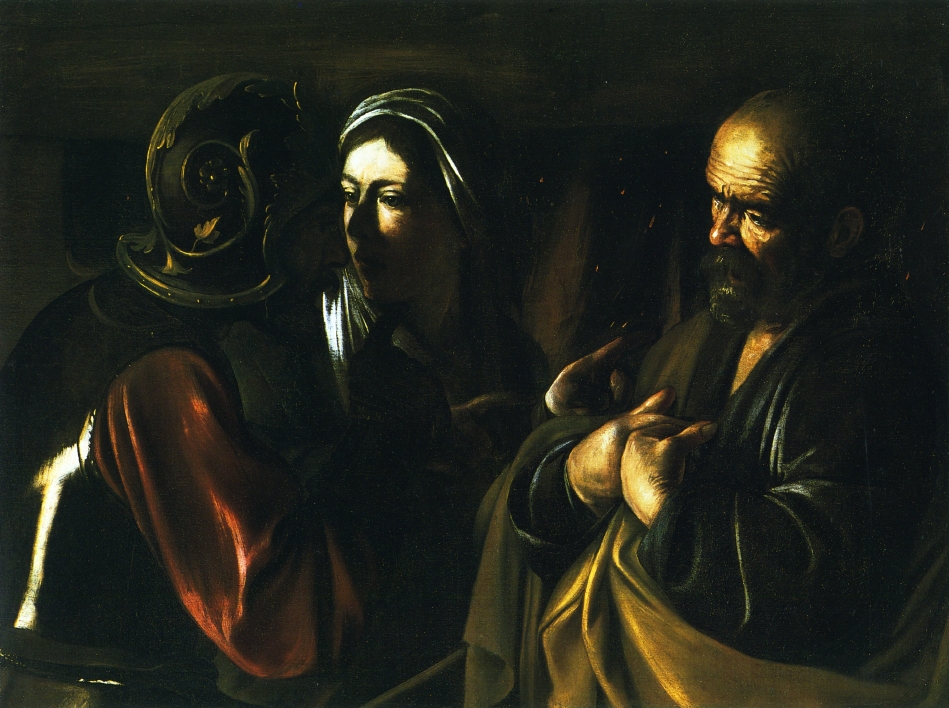
Illustration
1
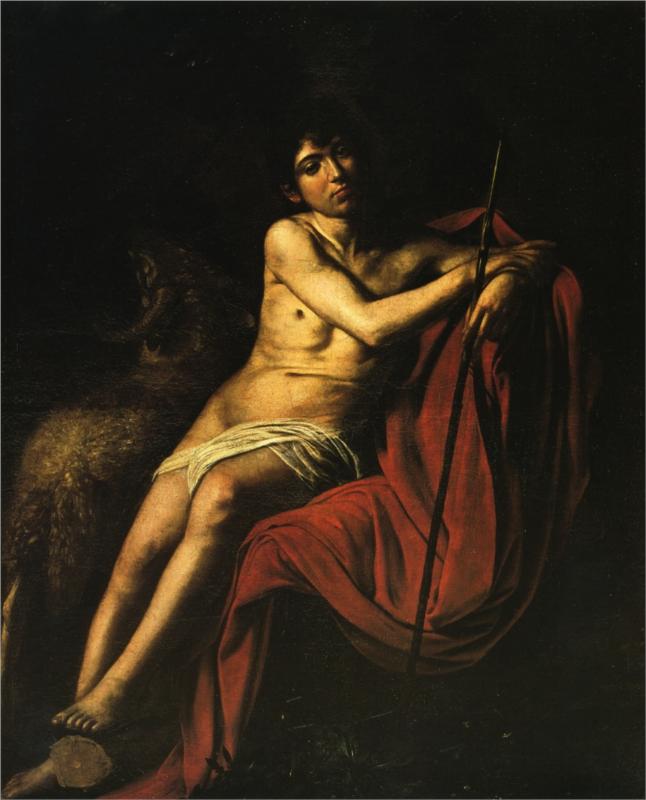
Illustration
2
Illustration
3
Illustration
4
Illustration
5
Illustration
6
Illustration
7
Illustration
8
Illustration
9
Illustration
10
Table of Contents
Publisher II
www.eCatholic2000.com
Copyright ©1999-2026 Wildfire Fellowship, Inc all rights reserved
|

 Keep Site Running